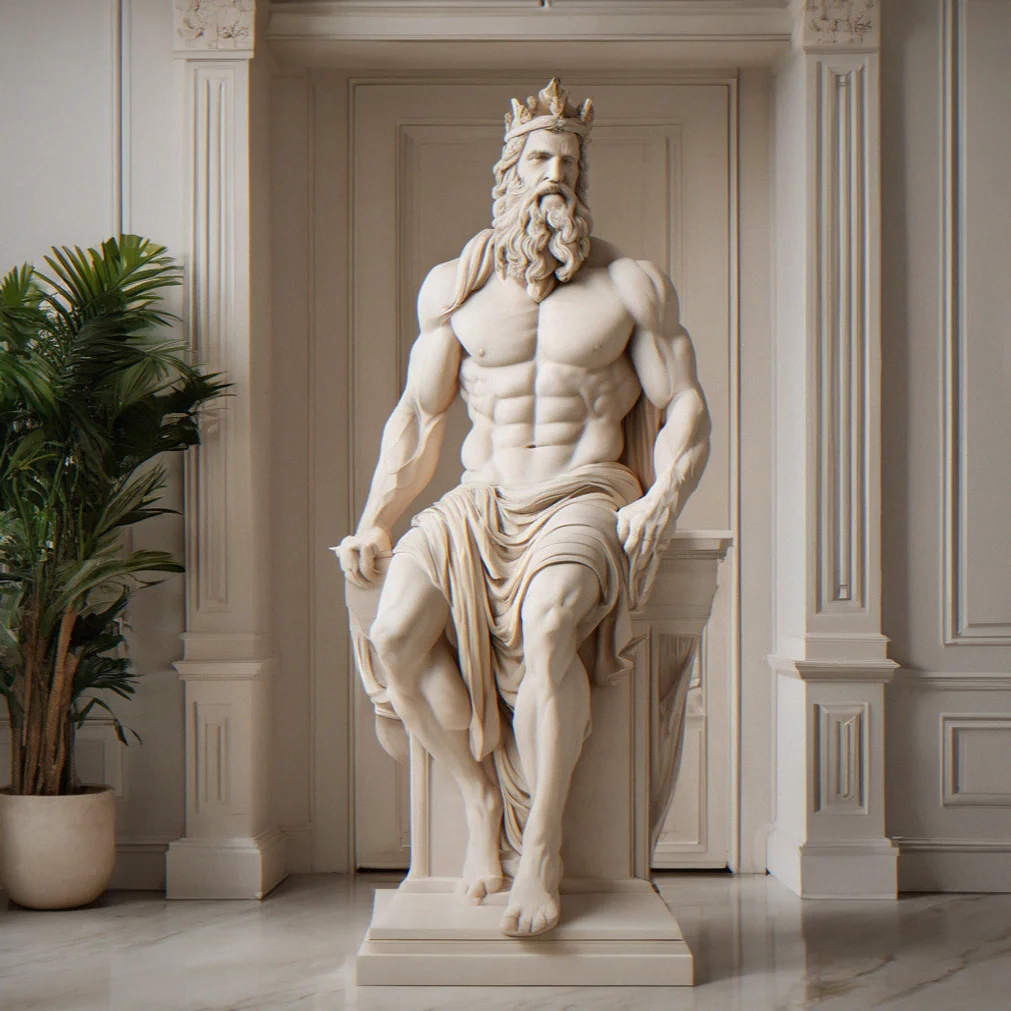
Zeus at 36 inches with a warm creaam finish, on marble

Plaster. Hand-finished. Real.

Greco-Roman deity casts between a foot and three feet tall, finished by hand the way sculptors have done it for centuries.
You want a Athena in your entryway or a Zeus in your library. Not cheap resin imports—something substantial with accurate anatomy and a surface that actually feels like stone. Each piece gets molded and hand-finished in plaster, which means no duplicates and every detail carved, sanded and aged until it belongs in the space. You get the presence and the craft without paying foundry prices.
A piece that's 28 to 36 inches tall does something to a room. You'll see these in actual libraries, entryways, and home offices — places where people live and work, not staged photos.
Zeus at 36 inches with a warm creaam finish, on marble

Athena with charcoal details, 32 inches, in a library nook

Apollo with terracotta tones, just under 30 inches, on walnut

You can see the hand-carved musculature and finish work up close

Three different scales and finishes grouped together on one shelf
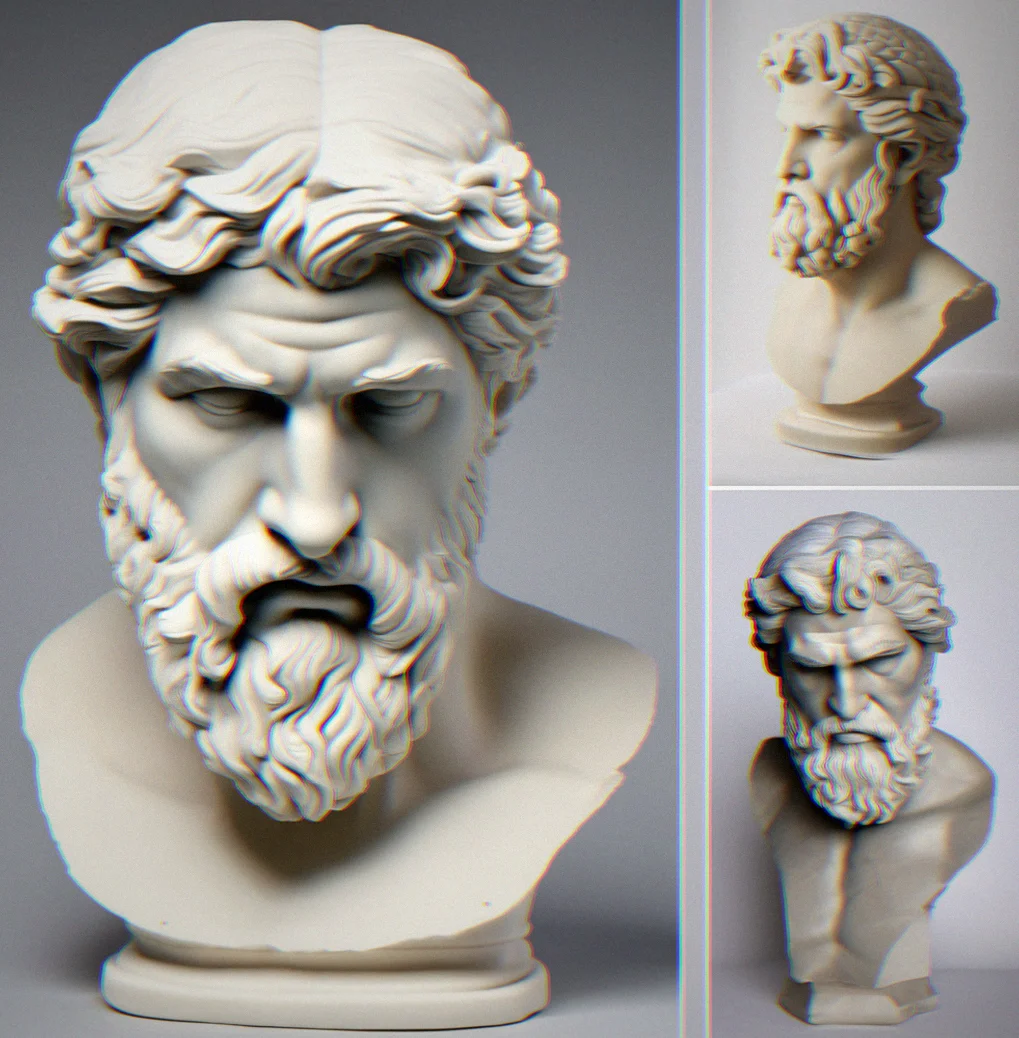







Silicone mold cracked open to show a fresh plaster cast of Poseidon still wearing those obvious mold seams before any hand work

Takes 6 to 8 weeks. We pour the mold, seam it, carve it, and hand-patina the whole thing. No 3D printing, no assembly line. Every piece gets worked on individually at each step, so they end up looking different from one another.

We start with high-resolution museum reference sculptures. The musculature, proportions, facial features — they're all true to form. When you go the cheap resin route, anatomy gets simplified. You'll catch it once you live with the piece.

A 28-inch plaster piece runs between 30 and 40 pounds. That density, the way light catches on the surface — it tells you something's real. Hollow resin just feels off because there's nothing there.

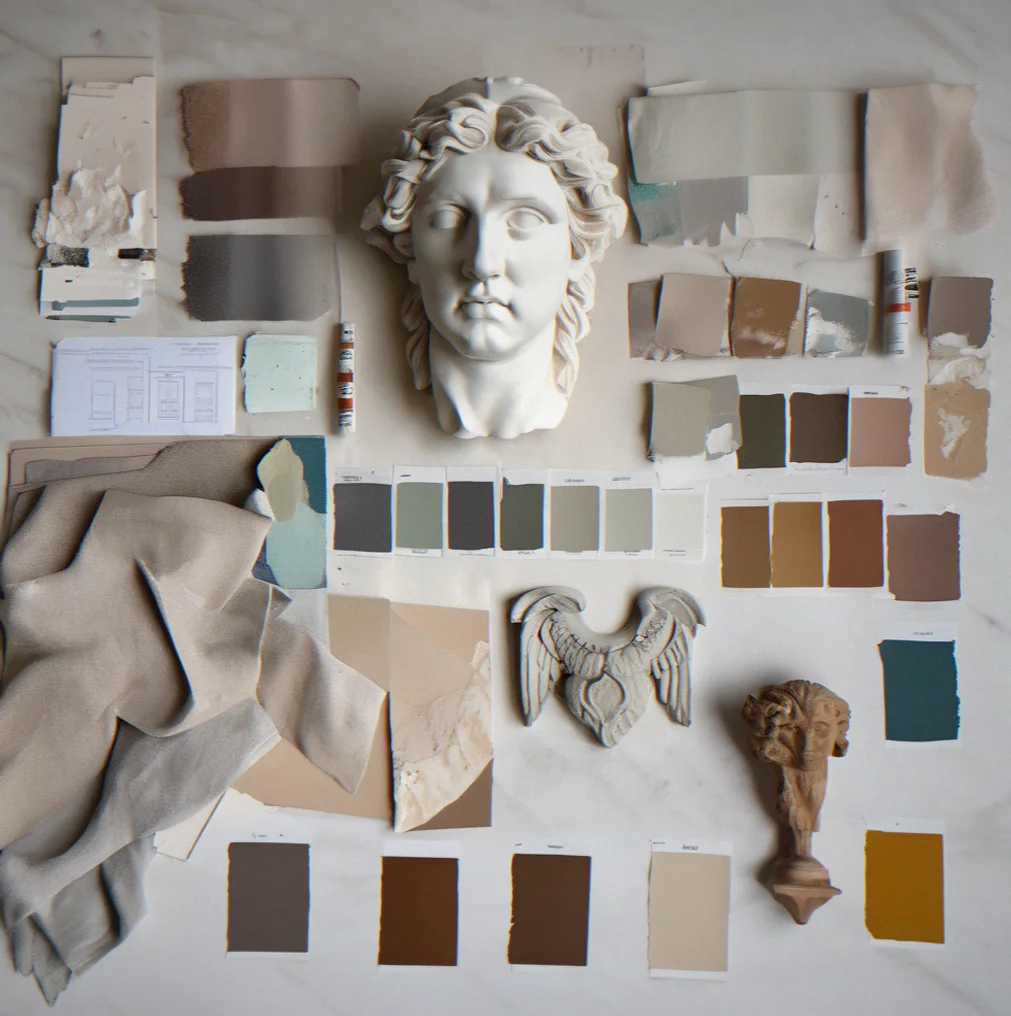
Cream white, warm grey, charcoal with recessed detail, terracotta, aged stone, even gilt accents if you want them. Just let us know what fits your space. We send a color sample first so you're sure before committing to the full order.
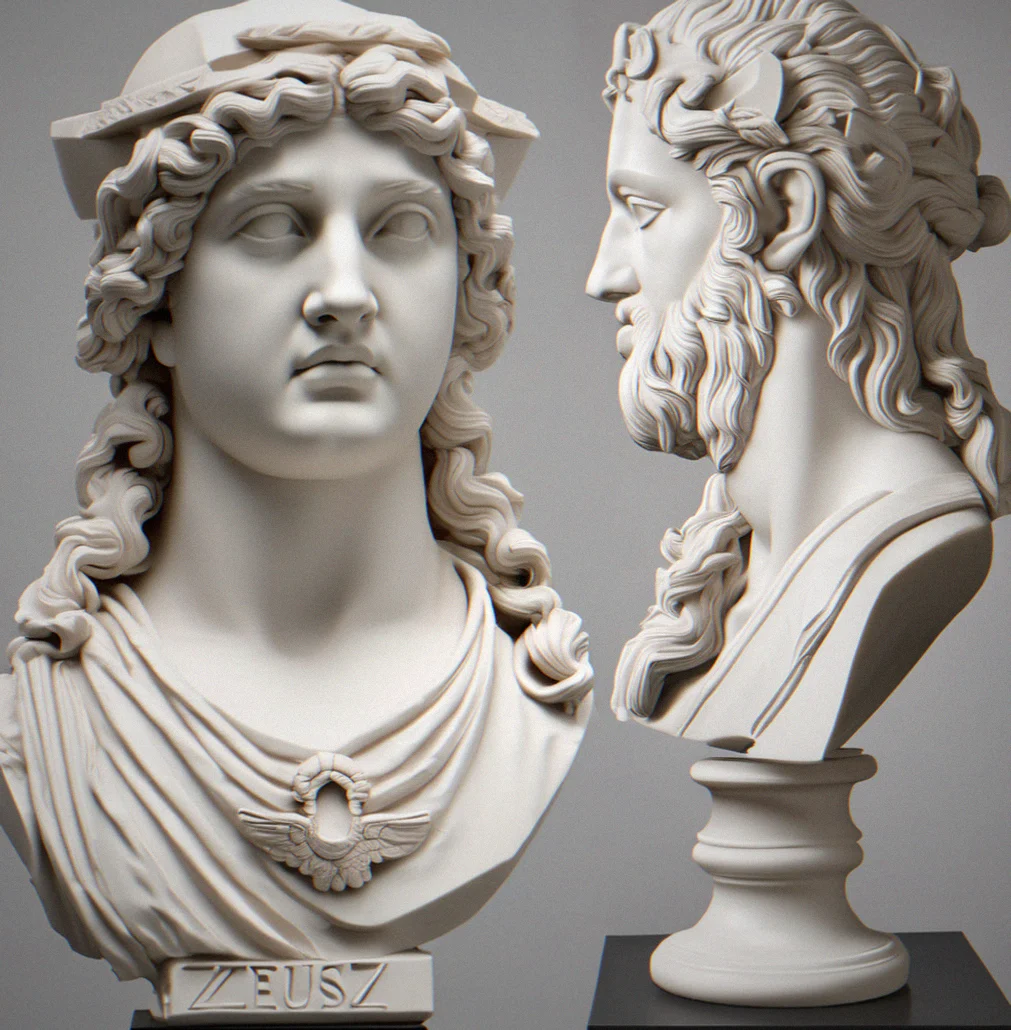

We start with a reference sculpture, usually a museum cast or a high-res scan of something classical. A silicone mold gets made from it over a few weeks, picking up every surface detail down to the pores. Once it's cured and split into two working halves, plaster goes in and sets. What comes out is pale with a seam line running down the middle where the halves met.
The real work happens in hand-finishing. A sculptor joins the two halves using plaster compound and carving tools, sharpens any details that got fuzzy in the mold, then sands it down progressively from rough to fine until the surface looks clean. Then patina comes in. That part depends on what fits your space. Cream finish keeps it pale and understated. A charcoal wash darkens the recessed areas so carved folds pop more. Terracotta tones add warmth. We've worked with five different finish methods, and each one shifts how the piece feels in the room.
Plan on six to eight weeks per sculpture. Not because we're moving slowly but because plaster needs cure time between stages and actual hand work takes actual time. You can't skip steps without tanking the surface. Your piece arrives ready to go. No assembly required, nothing to finish on-site. Just unpack it and place it.
The porous surface holds patina and catches light in a natural way. It reads like stone without being stone.
No two casts end up identical because hand-finishing adds intentional variation. Patina depth, surface texture, subtle details all get customized.
Silicone molds, plaster casting, hand-carving, patina work. It's been the standard for classical sculpture reproduction for centuries.
Questions
These keep coming up. Some are about technique, others about how long things take or what they cost. Here's what matters.
Plaster takes hand-finishing the way stone does. You carve into it, sand it, build patina over time. Resin is smooth and doesn't respond to detail work — molds wear out fast, so each new cast looks different from the last. Stone costs way more and weighs double. Plaster sits in the middle.
Six to eight weeks from order to your door. That's mold curing, casting, and the finishing work. We keep a handful of pre-finished pieces in cream white on hand that go out in two or three weeks, but stock is tight on those.
Not indoors. Plaster holds up fine through temperature and humidity swings. Just don't spray it with water or park it in direct sun for years on end — the finish will fade. Dust it like you would anything on display and you're good.
A 24-incher lands around 30 to 40 pounds. Go up to 32 inches and you're looking at 50 to 70. That heft means something — hollow resin feels cheap because it is.
Finishes, absolutely. Cream white, warm grey, charcoal recessed, terracotta, aged stone, and gilt accents are all available, and we can tweak any of them. Size-wise we work between 12 and 36 inches. Anything beyond that and we'll point you elsewhere.
Museums tend to use lighter finishes and less dramatic patina. We finish for homes, so sometimes we push the shadow and depth a bit further. The plaster quality and casting process are basically the same — that's the baseline.
Yeah. Patina shifts depending on how the light hits it. We send detailed shots of your specific piece before it ships so there are no surprises, and for custom finishes we include a sample swatch.
Both. Designers get wholesale rates on orders of 2 or more per design. We handle custom finishes and can ship to job sites. Send an email for pricing.

Let us know what you need. A specific deity, certain sizes, a particular finish, wholesale rates—whatever it is. You'll hear back within a day.